

18-20 January 2027
Kuala Lumpur
TBA
Overview
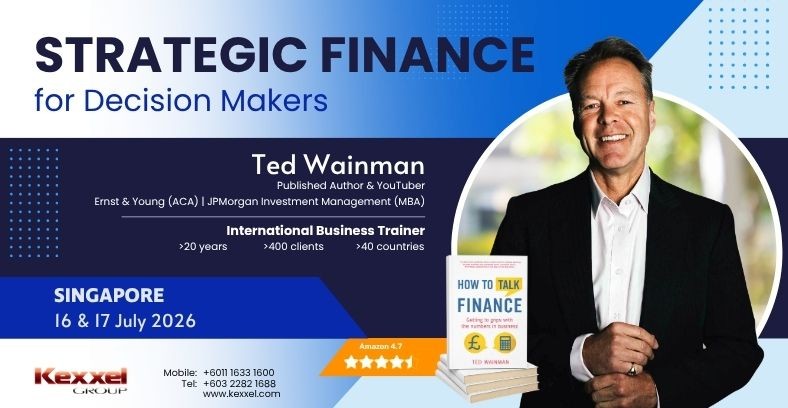
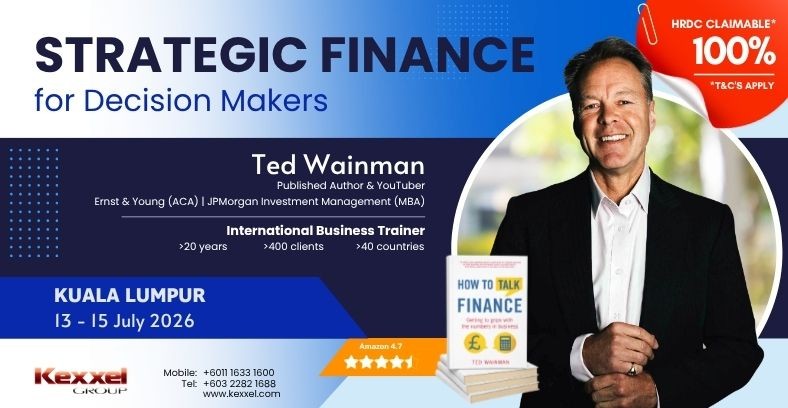
Welcome to “AI-Powered Budgeting & Forecasting for Non-Financial Managers”, a practical three-day programme led by Ted Wainman, a published author and finance expert with over 20 years of experience. Held from 18–20 January 2027 in Kuala Lumpur, this programme goes beyond budgeting fundamentals to help you translate business strategy into financial plans, challenge budget assumptions, optimise resource allocation and evaluate investment proposals.
COURSE OVERVIEW
The course is designed for professionals with some prior budgeting experience - it moves quickly past the basics and concentrates on the judgement, challenge and leadership strategies that senior roles demand. The course starts with how budgets can turn strategy into numbers, with a brief refresher on the financial building blocks that every budget rests on. Then, participants work through driver-based budgeting and analyse the budgeting process from a senior manager ’ s side of the table - from setting direction for the team, reviewing and challenging submissions, allocating scarce resources and judging investment proposals.
Participants then control the budget through the year – analysing variances, flexing the budget, using KPIs and taking corrective action, before moving on to Rolling Forecasts, scenarios, presenting & defending their numbers to Finance and the Board. Throughout the workshop, participants will use AI assistants such as Microsoft Copilot, ChatGPT, Claude or Gemini to test assumptions, draft commentary & challenge their own numbers – always alongside real figures and their own Excel models, checking the output, rather than trusting it.
Case Study materials will be drawn from published company accounts. The content can then be built around your own budget templates, planning cycle and approval processes.
Workshop Preparation: Participants are asked to bring a recent budget and a budget vs actual report for their own area (anonymised where needed) so they can apply their own numbers. A laptop with Excel and access to an AI assistant approved by their organisation is required.
KEY LEARNING OUTCOMES
By the end of this programme, you will be able to:
- Align Budgets with Business Strategy and key priorities.
- Build Smarter, More Accurate Budgets using key drivers of revenue, costs, margins and cash flow.
- Lead the Budgeting Process effectively and confidently.
- Challenge Budget Assumptions to uncover inflated figures, unrealistic projections and hidden gaps.
- Optimise Resource Allocation and evaluate investment decisions.
- Analyse Financial Performance using variance analysis, KPIs and corrective actions.
- Develop Agile Rolling Forecasts and assess scenarios to navigate changing business conditions.
- Present and Defend Budgets Confidently to finance, senior management and the board.
- Leverage AI for Smarter Planning, forecasting and analysis.
WHY YOU SHOULD ATTEND?
Budgets are where strategy meets the numbers.
For heads of department and general managers, budgets are also where resources are won and lost, where performance is judged and where the toughest conversations with Finance and the Board take place.
This course takes professionals who already work with budgets to the next level by building budgets around the real drivers of the business, challenging the budgets their teams submit, making trade-offs between competing priorities and using forecasts to steer performance through the year. Participants will also learn how AI can take the drudgery out of the budget cycle – Suggesting drivers, generating scenarios, drafting commentary and acting as a sceptical reviewer – freeing their time for the judgement calls that only they can make.
WHO SHOULD ATTEND?
This programme is ideal for Directors, General Managers, Department Heads, Senior Managers & Team Leaders with budgeting, forecasting or financial decision-making responsibilities from:
- Operations & Business Management Sales,
- Marketing & Commercial Procurement & Supply Chain Projects,
- Engineering & Technical Services Human Resources & Administration IT & Digital Transformation Finance,
- Budgeting & Corporate Planning Facilities & Asset Management
Prerequisites:
- Practical experience working with budgets strongly recommended.
- No previous experience of AI or formal financial qualifications needed
Rave Reviews
“Ted Wainman is a very clear and knowledgeable trainer, and was a strong highlight of the event”
- Pel Ping Choo, Carlsberg Brewery Malaysia Berhad, Head of Corporate Finance
“It was a very good training. Kexxel Group provided very good service. The event’s main strength was the trainer.”
- Dato ' Mohammad Azhar, Senior Deputy CEO, Penang Development Corporation
“Didn’t know finance subject can be entertaining and substantive. Congrats TED!”
- Awang Mohd Yazrif, Senior Manager, Investment & Strategic Business, Qhazanah Sabah Berhad
COURSE FACILITATOR

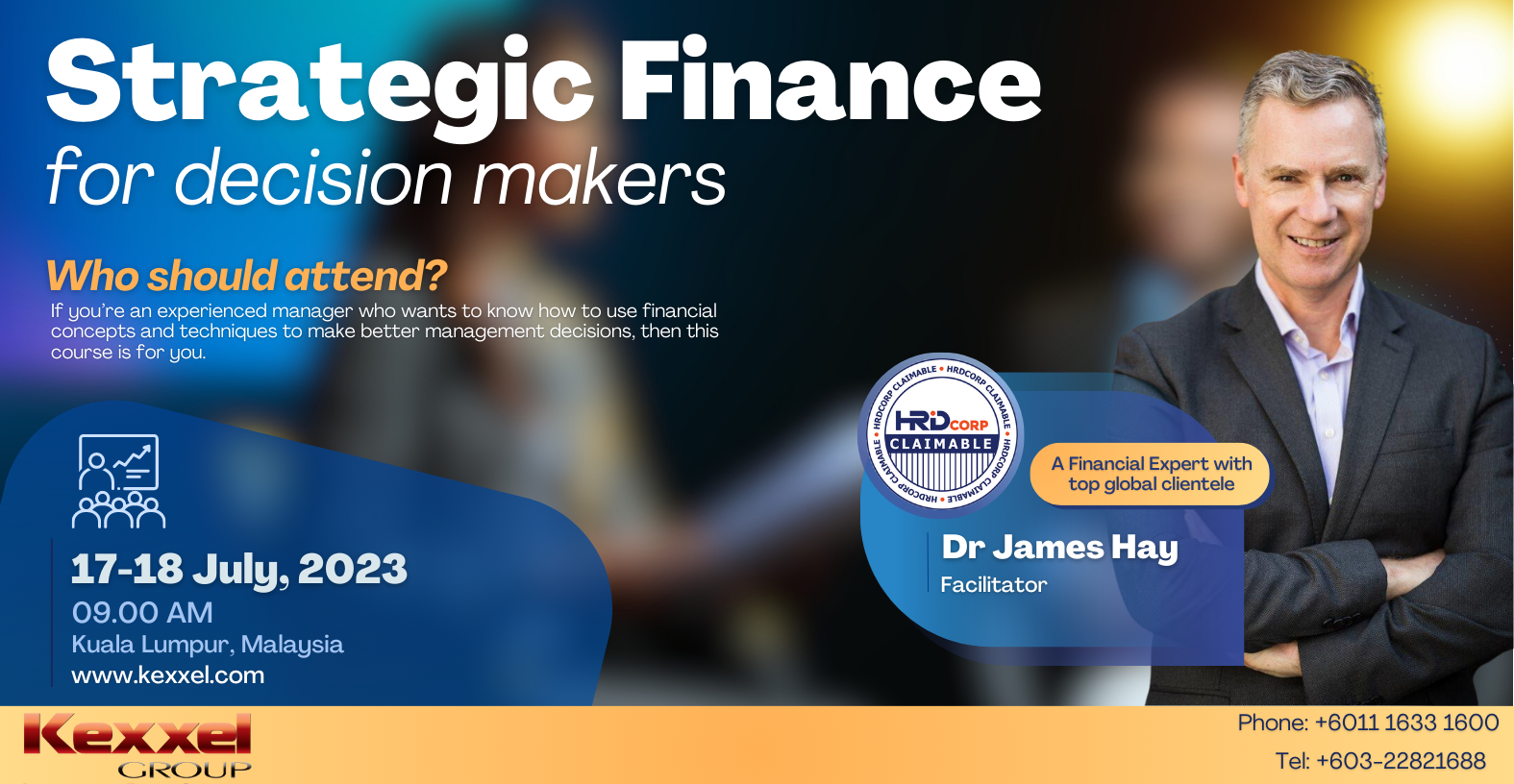
Ted Wainman
INTERNATIONAL BUSINESS TRAINER | PUBLISHED AUTHOR | YOUTUBER
About
Ted Wainman is a highly experienced business trainer and keynote speaker specialising in financial, commercial and strategic capability building for managers and senior professionals.
Achievements
Ted began his career at EY (Ernst & Young), where he trained and qualified as an Associate Chartered Accountant. He then spent six years at JPMorgan Investment Management, rising to Vice President, and completed a company-sponsored MBA in International Management of Financial Services, graduating top of his class with merit.
Since 2003, Ted has designed, developed and delivered practical, high-impact learning programmes for both the private and public sectors. He works closely with senior stakeholders to ensure training is commercially relevant, tailored to the organisation ’ s strategic objectives, and focused on delivering sustained behavioural and decision-making change.
Ted has worked with over 400 companies – from blue chips to financial services across industries. With a strong foundation in finance, Ted’ s core focus is on:
- Financial and commercial awareness
- Strategy and leadership
- Reading and interpreting financial statements
- Global Macro-Economics and market dynamics
Ted has worked in more than 35 countries globally and is experienced in addressing the needs of programmes across varying cultural backgrounds.
Agenda
AI-Powered Budgeting & Forecasting for Non-Financial Managers
Day 1:
Strategic Budgeting & Resource Allocation
Align budgets with business strategy, challenge assumptions and make informed resource allocation decisions.
Why Plan? Strategy, Business Plan & Budgets
- The cost of not planning.
- Budgets, forecasts and targets.
- Budgeting as part of the business plan.
- Linking the budget to strategy: turning priorities into resources.
- What the board and senior management want to see in your budget.
AI in Practice: Using AI to summarise your organisation’s strategy and list the budget assumptions it implies.
Budget Fundamentals
- Revenue, costs, margins and cash.
- Fixed vs variable; direct vs indirect costs – what they mean for decisions.
- Contribution and break-even.
- Opex vs Capex.
- How the income statement, balance sheet and cash flow interact – and why a budget that shows a profit can still run out of cash.
Case Study: Tracing budget decisions through the published accounts of a well-known listed company.
Leading The Budgeting Process
- The budget cycle.
- Top-down vs bottom-up, and how to reconcile the two.
- Incremental vs zero-based budgeting.
- Identifying & modelling the key drivers: volume, price, headcount and productivity.
- Structuring & compiling the budget – avoiding pitfalls.
- Setting guidelines and assumptions for your team.
AI in Practice: Ask AI for the drivers of a cost line, then compare its list with your own.
Challenging the Budget & Allocating Resources
- Reviewing the budgets your team submits.
- The behaviour behind the numbers – padding, sandbagging, optimism bias and “ use it or lose it”.
- Questions that test a budget: a challenge checklist for budget approvers.
- Allocating resources between competing bids & priorities.
- Judging an investment proposal.
- Exercise: Sit as an approval panel to challenge a set of real budget bids.
AI in Practice: Use AI as a second reviewer to find the weakest assumptions in a budget submission.
Day 2:
Budget Control & Forecasting
Strengthen budget monitoring, analyse variances and develop reliable forecasts to drive better business decisions.
Reviewing & Controlling the Budget
- Budget Review: Monthly reporting insights.
- Variance analysis: Price, Volume and Mix.
- Flexible Budgeting: Adjust budgets to changing business conditions and identify costs within your control.
- Choosing KPIs that give early warning.
- Identifying corrective action and holding people accountable.
AI in Practice: Draft a variance commentary with AI, then rewrite it with the real reasons behind the numbers.
Forecasting
- Forecasting vs budgeting.
- Rolling forecasts – Do you still need an annual budget?
- Scenario and sensitivity analysis: Which drivers really move the result.
- Forecast accuracy and bias – building a culture of honest forecasts.
AI in Practice: Generate the Best, Base and Worst-case scenarios, then test them against your own Excel model.
Presenting & Defending the Budget
- Telling the story behind the numbers.
- Anticipating challenge from finance, senior management and the board.
- Negotiating for resources: making the case and knowing what to trade.
- Exercise: Present a budget and handle a round of tough questions.
AI in Practice: Ask AI to play a sceptical finance director and fire questions at your budget.
Case Study, Part 1: Build a Driver-Based Budget
- Teams take a business unit of a real listed company from the region – i.e. an airline, a retailer or a telecoms operator, (chosen to suit the delegate mix) with its published annual report as the starting point.
- Mapping the drivers: Volumes, prices, headcount, cost per head, capacity and capex.
- Building a driver-based budget in a ready-made Excel template, including a simple cash view and a bid for a share of a limited capital pool.
- Recording every assumption and the evidence behind it. The assumptions log the board will ask for.
Day 3:
Practical Budgeting, Scenario Planning & AI Applications
Apply budgeting and forecasting skills through real-world simulations, AI-assisted analysis and defending financial decisions to senior management.
Case Study, Part 2: The Approval Panel
- Teams swap budgets and sit as the executive committee - reviewing another team’s submission.
- Applying the challenge checklist: Padding, optimism, missing costs, unrealistic phasing and weak evidence.
- Deciding how to allocate the capital pool between the competing investment bids – and explain why.
- Debrief: What made a budget convincing and what undermined it?
AI in Practice: Run the submission past AI as a second reviewer, then compare its challenges with the panel’s.
Case Study, Part 3: Managing a Business Disruption
- Mid-year, there are shocks based on events that actually hit the company or its sector, i.e. a jump in fuel or energy costs, a currency swing, a fall in demand or a budget cut.
- Flex the budget and update the Rolling Forecast for the rest of the year.
- Sensitivity Analysis: Find the two or three drivers that move the result most.
- Choose corrective action and weigh trade-offs – what to cut, what to defer and what to protect.
- Reality Check: Compare each team’s response with what the company actually did and how it explained it to investors.
AI in Practice: Use AI to generate scenarios, then run the numbers through your own Excel model. The AI scenario is a starting point, not a forecast.
Case Study, Part 4: Defending Your Budget
- Each team presents its revised budget and forecast to a Board panel: the trainer as CFO, fellow participants as directors.
- Tell the story: What has changed, why it has changed and what you need from the board.
- Handle tough questions on assumptions, risks and returns.
- Structured feedback on the numbers, the story and the handling of challenge.
AI in Practice: Rehearse beforehand with AI playing a sceptical CFO.
Working with AI in Budgeting & Forecasting
- What AI does well (and badly) in the budget cycle.
- Prompting for drivers, scenarios and commentary.
- Checking AI output: Numbers, sources and confident-sounding errors.
- Using AI alongside real figures and validated Excel models.
- Responsible & Ethical AI use: Confidentiality, your organisation’s AI policy and what never to share.
- Using AI to keep building your financial fluency after the workshop
AI in Practice: Your take-away prompt pack and personal action plan.